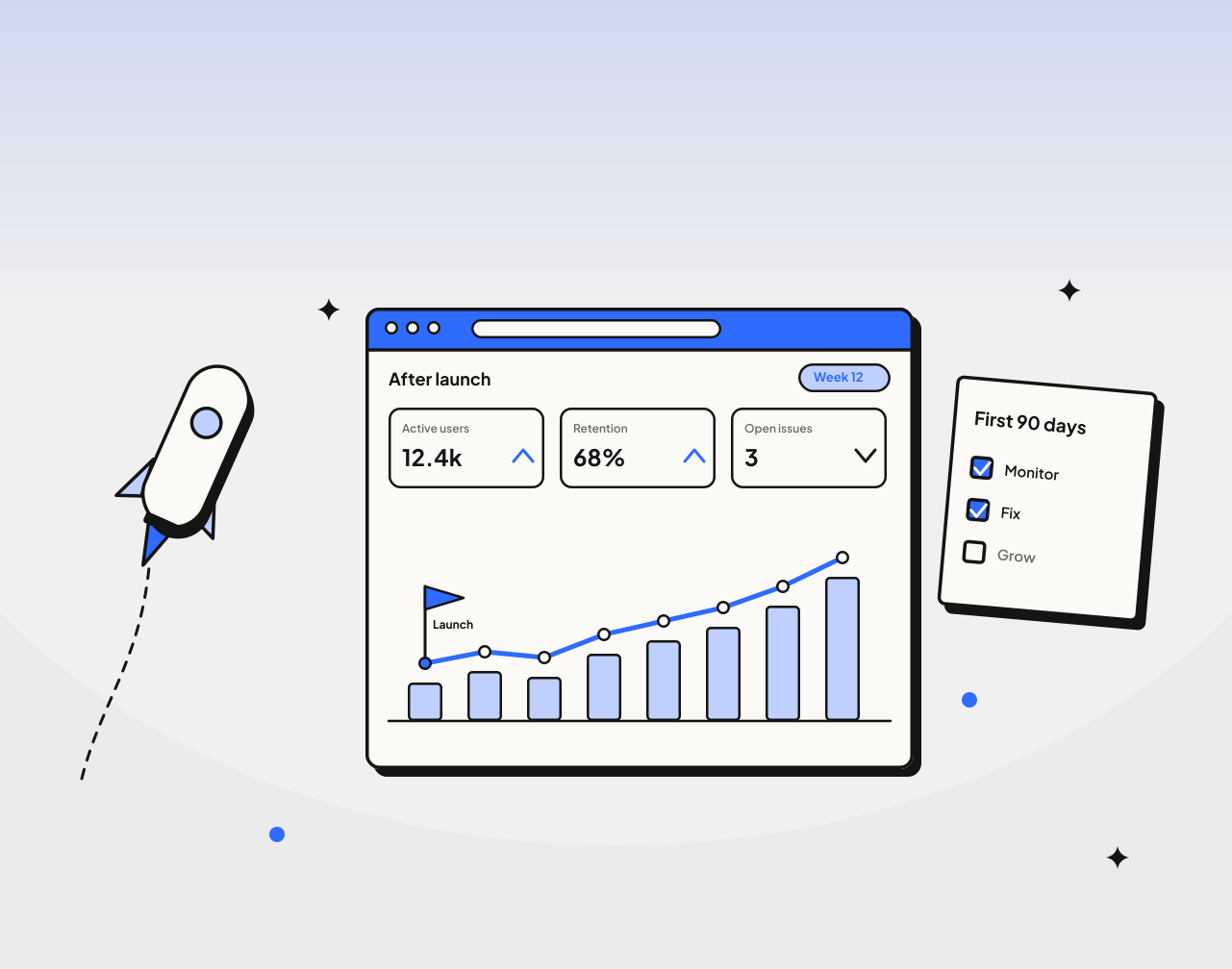
Launch is the start, not the finish. How we plan the first three months after a product goes live, and why they matter most.
Launch day gets all the attention, but the weeks after it decide whether a product succeeds. That’s when real users arrive, real data comes in, and the first version meets the real world.
We plan for that period from the start of every project.
The first two weeks: watch closely
Right after launch, we watch everything: errors, slow pages, where people drop off and what support messages say. Small problems are cheap to fix now and expensive to fix later.
We keep the team that built the product on hand, so fixes ship in hours, not weeks.
The first month: learn what people actually do
Users rarely behave exactly as planned. Some features get ignored, others get used in ways nobody expected. We look at:
- Which paths people take through the product
- Where they get stuck or give up
- What they ask for in support and feedback
That turns opinions into evidence for the next round of work.
The first three months: improve in small steps
With real data in hand, we plan small, regular releases. Each one fixes a real problem or improves something people already use. Big new features can wait until the basics are working well.
Keep a list, not a backlog
Ideas pile up quickly after launch. We keep one short, ordered list of what matters most, agreed with the client. Anything that drops off it for a few months probably wasn’t important.
Launch is a beginning
The best products we’ve worked on improved steadily long after launch. If you’re planning a product and want a partner for what comes after, let’s talk.
Working on something similar?
Tell us what you're building. We'll come back with questions and a plan.
Start a project